
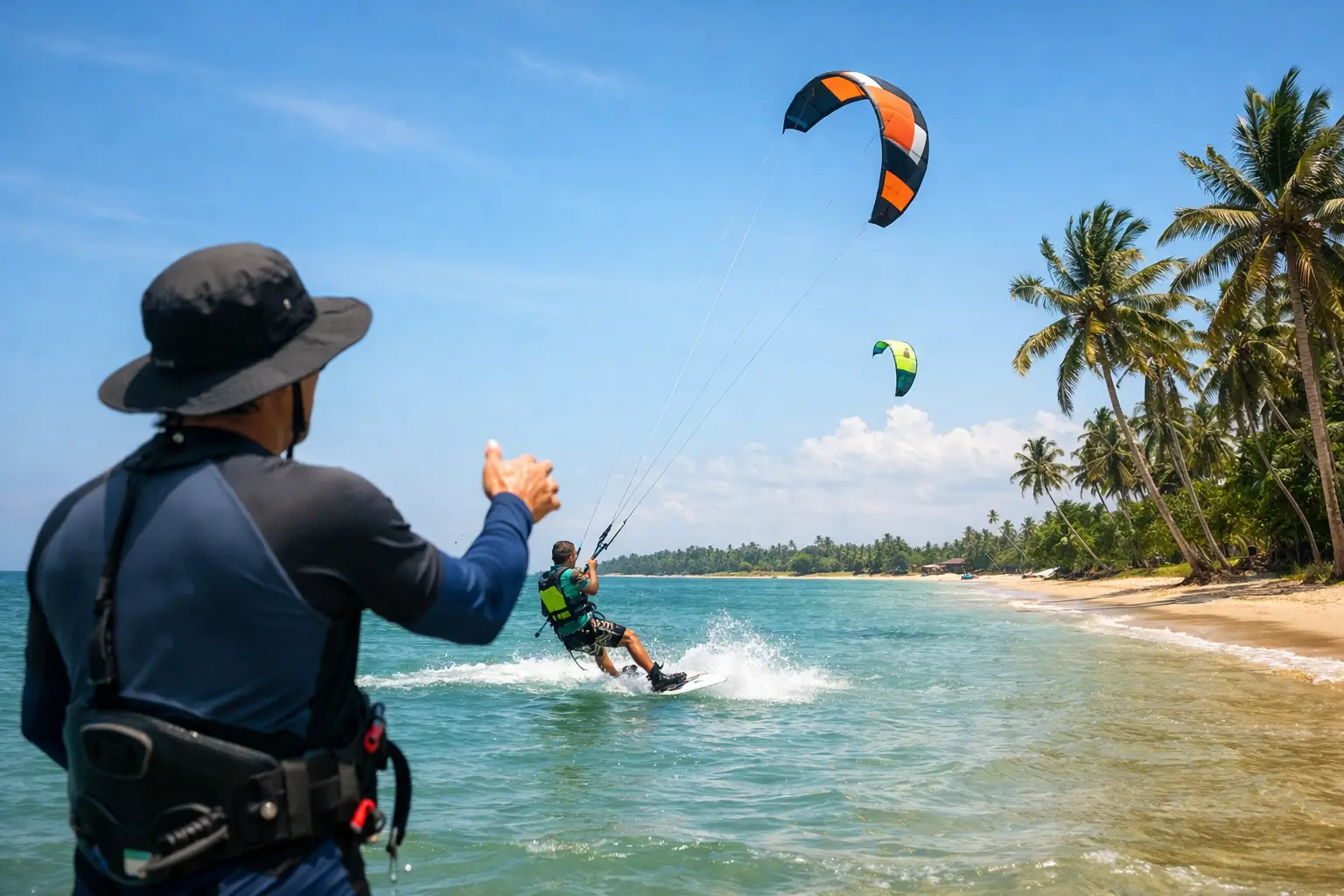
The first time you stand on a calm lagoon in Kalpitiya and watch a kite pull cleanly across the water, the appeal is obvious. Kitesurfing lessons in Sri Lanka are not just about learning a sport – they are about learning it in a place that makes the process feel lighter, warmer, and far more memorable than a standard lesson at home.
For many travelers, Sri Lanka works so well because the experience goes beyond the water. You can spend the morning in a lesson, come back for a long lunch, ease into the pool in the afternoon, and still have time for sunset by the lagoon. That balance matters, especially if you are traveling with a partner, family, or friends who may want a mix of activity and downtime.
Why kitesurfing lessons in Sri Lanka stand out
Sri Lanka has earned a strong reputation among kiters for one simple reason – conditions. In Kalpitiya, the lagoon offers broad stretches of shallow flat water, which gives beginners a much more forgiving place to practice. You are not immediately dealing with heavy shore break or crowded urban beaches. Instead, you get space, warm water, and a setting that helps you focus.
That does not mean every lesson feels the same for every guest. If you are a complete beginner, flat water can make early progress less intimidating. If you already have some experience, the same conditions can help you refine technique, improve board starts, and build confidence before moving into stronger wind or different water states.
The climate is another major advantage. Many travelers from Europe, North America, and other seasonal kitesurfing markets come looking for warm-weather sessions and consistent wind. Sri Lanka often fits neatly into that goal, particularly for guests who want a destination that combines sport with a broader vacation.
Why Kalpitiya is the best place to learn
When people talk about kitesurfing in Sri Lanka, Kalpitiya usually leads the conversation. That is because the area brings together the right ingredients for instruction: steady wind in season, wide open teaching space, and a lagoon environment that supports progression.
For beginners, location shapes the whole learning curve. A shallow lagoon means less time feeling overwhelmed and more time understanding the fundamentals – wind window awareness, body dragging, kite control, water starts, and safe riding posture. In practical terms, it often leads to a smoother first experience.
For intermediate riders, Kalpitiya is still compelling because it is not only a beginner destination. Once your lesson block is done, you can continue riding in the lagoon, build consistency, and in some cases branch into downwinders or nearby spots depending on conditions and guidance.
This is also where the holiday side of the trip starts to matter. Learning is easier when your stay is comfortable, your meals are taken care of, and the rhythm of the day feels relaxed. In Kalpitiya, many guests are not looking for a bare-bones sports camp. They want a beautiful place to stay, good food, and the option to turn a lesson-based trip into a full coastal escape.
What to expect from your first lessons
If you are booking kitesurfing lessons in Sri Lanka for the first time, it helps to know what the early sessions usually involve. Most beginners do not start by jumping on a board right away. A proper lesson progression begins on land and in shallow water with the basics of safety, setup, wind direction, launching, landing, and kite control.
After that, lessons usually move into body dragging and power control in the water. This stage can feel less glamorous than riding, but it is where real confidence is built. Once an instructor sees that you can control the kite safely and consistently, the lesson shifts toward board starts.
Some guests stand up on the board in their first block of lessons. Others need more time. That is normal. Progress in kitesurfing depends on wind conditions, body awareness, prior board sports experience, and how comfortable you feel in the water. The best schools do not rush that process. They teach for long-term confidence, not just a quick photo moment.
How many lessons do you really need?
This is where expectations matter. A single lesson can give you a strong introduction, but most complete beginners need multiple sessions before they ride independently. If your goal is to understand the sport and try something new during your vacation, one or two lessons may be enough. If your goal is to become a self-sufficient rider, plan for a longer learning block.
A short holiday can still be very productive, especially in good wind. But kitesurfing is skill-based, and progression is rarely identical from one person to the next. Athletic guests sometimes improve quickly, yet even strong swimmers or experienced surfers may need time to adapt to kite control.
That is why a flexible itinerary often works best. Instead of assuming you will “finish” learning in one exact number of hours, allow room for progression. Build your trip around quality sessions, rest, and a realistic pace.
Choosing the right school or resort-based lesson experience
Not all lesson experiences are created equal. Price matters, but it should not be your only filter. Good instruction depends on certified teachers, reliable equipment, clear safety standards, and lesson structures that match your level.
It also helps to think about the full day, not just the hour on the water. If you are staying at a comfortable resort that can organize lessons alongside accommodation, meals, and transport, the trip becomes much easier to manage. That is especially true for couples or mixed-interest groups, where one guest may be kiting while another wants a more relaxed day by the pool, a boat trip, or simply a quiet place to unwind.
This is where a property like Kitelantis feels particularly well suited to the destination. The appeal is not only direct access to Kalpitiya’s kiting environment, but also the comfort around it – spacious rooms, thoughtful dining, and a setting that supports both active mornings and easy afternoons.
Best time to book kitesurfing lessons in Sri Lanka
Wind season is a major part of planning. Sri Lanka has two main kitesurfing seasons that attract travelers at different times of year, and Kalpitiya is often considered one of the country’s most reliable areas during those windows.
The exact experience depends on the month, the strength of the wind, and your comfort level. Some guests prefer peak wind because they want maximum time on the water. Others, especially beginners, may prefer shoulder periods when conditions can feel a little less intense. There is no universal answer here – it depends on your experience, your goals, and how much of your trip you want centered purely on kiting.
If learning is your main priority, booking in a good wind period is worth it. If your trip is more of a general beach holiday with a few lessons added in, you may place equal value on accommodation style, excursions, and the overall pace of the stay.
What to bring and how to prepare
Most lesson providers supply the technical gear you need, so you usually do not need to travel with a full setup as a beginner. Still, a few personal items make a big difference: light sun-protective clothing, reef-safe sunscreen, sunglasses with a retainer if appropriate, and anything you personally prefer for comfort in the water.
The physical side is less about extreme strength and more about coordination and stamina. You do not need to arrive in elite shape, but being comfortable in the water helps. Rest matters too. Guests often underestimate how tiring a first lesson can be, especially under strong sun.
It is also worth arriving with the right mindset. Kitesurfing is exciting, but the first sessions are usually about learning control, not speed. Patience tends to lead to faster progress than trying to force the ride too early.
A better kind of active beach holiday
One of the strongest reasons to choose Sri Lanka for kitesurfing lessons is that the trip does not have to revolve around only one thing. You can learn a high-energy sport in the morning and still enjoy the comforts of a proper resort stay. That combination is what makes Kalpitiya especially appealing for modern travelers who want activity without giving up comfort.
For some guests, the lesson becomes the highlight of the vacation. For others, it becomes part of a bigger itinerary that includes snorkeling, boat rides, wildlife experiences, and long unhurried meals by the coast. Either way, the destination gives you room to shape the experience around your own pace.
If you are considering kitesurfing lessons in Sri Lanka, the smartest approach is to book with clear goals and leave space for enjoyment. Learn well, stay somewhere that lets you recover in comfort, and let the lagoon do what it does best – make your first rides feel like the start of something you will want to come back to.